What is nursing home quality improvement?
Quality improvement (QI) is a structured way of finding the gap between the care residents receive and the care they should receive, then closing it and keeping it closed. In nursing homes it covers clinical care (infections, pressure injuries, pain, falls, medications) and quality of life (choice, dignity, relationships, meaningful days).
Researchers usually describe three kinds of quality measure. Structure is what a home has: staff hours, turnover, training and equipment. Process is what staff do: assessing pain, offering vaccines, assigning the same aides to the same residents. Outcome is what happens to residents: infections, hospital transfers, loss of mobility, how they say they feel. Good programs track all three, because outcomes move slowly and processes are what staff can change this week.
Since the 2016 federal reform of nursing home requirements, every Medicare- and Medicaid-certified facility must maintain a Quality Assurance and Performance Improvement program, known as QAPI. Surveyors review it under F865 (the program itself) and F867 (QAPI and QAA committee activities). In practice that means a functioning committee, data on high-risk and problem-prone areas, and documented performance improvement projects.
What are the core quality improvement focus areas?
Most national improvement efforts have converged on the same short list. The nine areas below match the goals used by the former national campaign from 2013 (see the campaign era below), and they still map neatly onto today's federal measures and survey tags.
| Focus area | Why it matters | Where you can see it measured |
|---|---|---|
| Staff stability | Turnover disrupts relationships, training and safety; it predicts poorer outcomes. | Care Compare nurse, RN and administrator turnover (from payroll data); part of the staffing star rating. |
| Consistent assignment | The same caregivers notice small changes in condition and know residents' preferences. | Internal tracking: caregivers per resident per month, or share of shifts with a primary caregiver. |
| Person-centered care | Choice over routines, food and activities is a resident right and drives quality of life. | MDS Section F preference interview, preference tools such as PELI, resident and family feedback, survey tags F561 and F656. |
| Safely reducing hospitalizations | Transfers are risky and distressing; many changes in condition can be managed in place. | Care Compare long-stay hospitalizations and ED visits per 1,000 resident days; short-stay rehospitalization and ED visits. |
| Infections | Residents are vulnerable to C. diff, UTIs, respiratory outbreaks and drug-resistant organisms. | Long-stay UTI measure; healthcare-associated infections requiring hospitalization; survey tags F880 to F887. |
| Medications | Unnecessary psychotropics and polypharmacy cause falls, sedation and harm. | Long-stay and short-stay antipsychotic measures; survey tags F757 (unnecessary drugs) and F605 (unnecessary psychotropics, formerly F758). |
| Mobility | Lost mobility leads to lost independence, pressure injuries and depression. | Long-stay "ability to walk independently worsened" and "need for help with daily activities increased". |
| Pain | Untreated pain affects sleep, appetite, mood and behavior, especially in dementia. | MDS Section J and survey tag F697 (the public pain measures were retired in 2019). |
| Pressure ulcers and injuries | Largely preventable wounds that cause pain, infection and hospitalization. | Long-stay pressure ulcer measure; short-stay new or worsened pressure ulcers/injuries; survey tag F686. |
Closely related areas get their own guides: falls prevention, physical restraints and advance care planning. Restraints, advance care planning and pain were among the campaign's earlier goals, and all three remain survey priorities.
How is nursing home quality measured?
Public quality data come from three federal sources. The Minimum Data Set (MDS 3.0) is the standardized assessment completed for every resident; Medicare claims track hospital stays and emergency visits; and the Payroll-Based Journal (PBJ) collects daily staffing hours from payroll records. Inspection findings come from state survey agencies working for CMS.
CMS publishes the results on Care Compare, which replaced Nursing Home Compare on 1 December 2020. Its Five-Star Quality Rating System has three domains plus an overall rating:
- Health inspections: deficiencies from the two most recent standard surveys plus three years of complaint and infection-control findings, weighted by scope and severity (see health inspections).
- Staffing: six measures, three for staffing levels (including weekend staffing) and three for turnover (total nurse staff, registered nurses and administrators); see staffing ratings.
- Quality measures: 15 measures feed the rating, nine for long-stay residents and six for short-stay residents. Care Compare displays additional measures that are not part of the rating.
Public measures lag by months and are averaged over a whole facility. A QAPI team needs its own faster data as well: monthly infection logs, falls and hospital transfer logs, turnover and assignment trackers, and resident feedback. Our tracking tools collect templates for these.
How do nursing homes improve quality? QAPI, PDSA and benchmarking
CMS frames QAPI around five elements: (1) design and scope, (2) governance and leadership, (3) feedback, data systems and monitoring, (4) performance improvement projects (PIPs), and (5) systematic analysis and systemic action. The method most teams use inside a PIP is the Plan-Do-Study-Act (PDSA) cycle promoted by the Institute for Healthcare Improvement.
- 1Pick one goal and set a baselineChoose a focus area where your data show a gap. Pull 3 to 6 months of baseline data (for example, hospital transfers per 1,000 resident days or caregivers per resident per month) so you can tell a real change from normal variation.
- 2Find the root causesUse a fishbone diagram, five whys or a root cause analysis with front-line staff in the room. Certified nursing assistants usually know where the process breaks.
- 3Plan a small testWrite a prediction: "If night shift uses a Stop and Watch card on one unit for two weeks, we expect fewer unplanned evening transfers." Keep tests small, fast and local.
- 4Do, then studyRun the test, collect the data you planned, and compare with your prediction. Talk to the staff who ran it about what got in the way.
- 5Act: adopt, adapt or abandonSpread what worked, change what partly worked and run another cycle, or drop it. Several rapid cycles beat one large rollout.
- 6Sustain and celebrateBuild the change into policy, orientation and audits, keep plotting the measure monthly, and recognize the team. Gains fade quickly without ongoing monitoring.
Benchmarking means comparing your rates with state and national averages on Care Compare and with similar homes in your region. Your state's Quality Innovation Network-Quality Improvement Organization (QIN-QIO), funded by CMS, offers free coaching and data comparisons to nursing homes. Practical templates for every step are in our quality improvement toolkit and implementation guides.
The National Nursing Home Quality Improvement Campaign era
From 2006 to 2016 this web address hosted Advancing Excellence in America's Nursing Homes, a voluntary national campaign launched in September 2006 by a coalition the campaign described as 28 organizations: provider associations, consumer advocates, clinicians, quality improvement organizations, foundations and government agencies. It later operated under the nonprofit Advancing Excellence in Long-Term Care Collaborative (AELTCC).
The campaign asked nursing homes to pick goals, track their own data with free tools and compare progress with peers. Its 2013 relaunch introduced nine goals split into "process" and "clinical outcome" goals, the same quality improvement focus areas listed above. The campaign reported that more than 60% of US nursing homes had signed up by 2013. In August 2016 the collaborative transferred operation to CMS, which renamed it the National Nursing Home Quality Improvement (NNHQI) Campaign and used it to support Quality Innovation Network-QIO work until the website was retired around the end of the 2010s.
For the full timeline, partners, goals and what the campaign reported, read our history of Advancing Excellence in America's Nursing Homes.
What should families look for in a nursing home's quality?
You do not need to understand QAPI to judge whether a home is serious about quality. Combine the public data with what you see and hear. Our family guide to nursing home quality covers this in depth; here is the short version.
- Check Care Compare first. Look past the overall star rating to the staffing domain, turnover figures and recent inspection reports. A high overall rating with one-star staffing deserves questions.
- Ask about turnover and assignment. "How long have your aides and nurses been here? Will my mother see the same aides most days?" Clear answers signal stability.
- Ask what the home is working on. A good administrator can name a current improvement project and the data behind it.
- Watch daily life. Are residents up and dressed at times that suit them? Do staff knock, use names and offer choices at meals?
- Ask how they handle a change in condition. Can they start IV fluids, draw labs or get a practitioner on the phone at night before sending someone to the hospital?
- Ask about infection control and vaccines. Who is the infection preventionist and how are outbreaks communicated to families?
Use our tour questions and warning signs of poor care checklists. If something is wrong, your state's long-term care ombudsman is a free, independent advocate.
Which federal rules drive quality improvement?
| F-tag | Requirement | Focus area |
|---|---|---|
| F865 / F867 | QAPI program and QAA committee activities | QAPI |
| F561 | Self-determination: choice over schedules, care and activities | Person-centered care |
| F656 | Comprehensive person-centered care plan | Person-centered care |
| F880 / F881 / F882 | Infection prevention program, antibiotic stewardship, infection preventionist | Infections |
| F697 | Pain management | Pain |
| F686 | Treatment and services to prevent and heal pressure ulcers | Pressure injuries |
| F689 | Free of accident hazards; supervision to prevent accidents | Falls |
| F604 | Right to be free from physical restraints | Restraints |
| F605 | Unnecessary psychotropic drugs and chemical restraints (formerly F758, moved in 2025) | Medications |
Staffing rules changed in 2026: the 2024 federal minimum staffing standards were repealed by a CMS interim final rule effective 2 February 2026, but the facility assessment requirement (42 CFR 483.71), sufficient-staff requirement, 8 consecutive hours of RN coverage a day and a full-time director of nursing all remain. That makes voluntary staff stability work more important, not less.
Dementia care is a quality area of its own; see our dementia care in nursing homes guide, including the National Partnership to Improve Dementia Care.
In this guide
 Person-centered carePerson-centered care means a resident's own preferences and goals shape daily routines, meals, activities and…
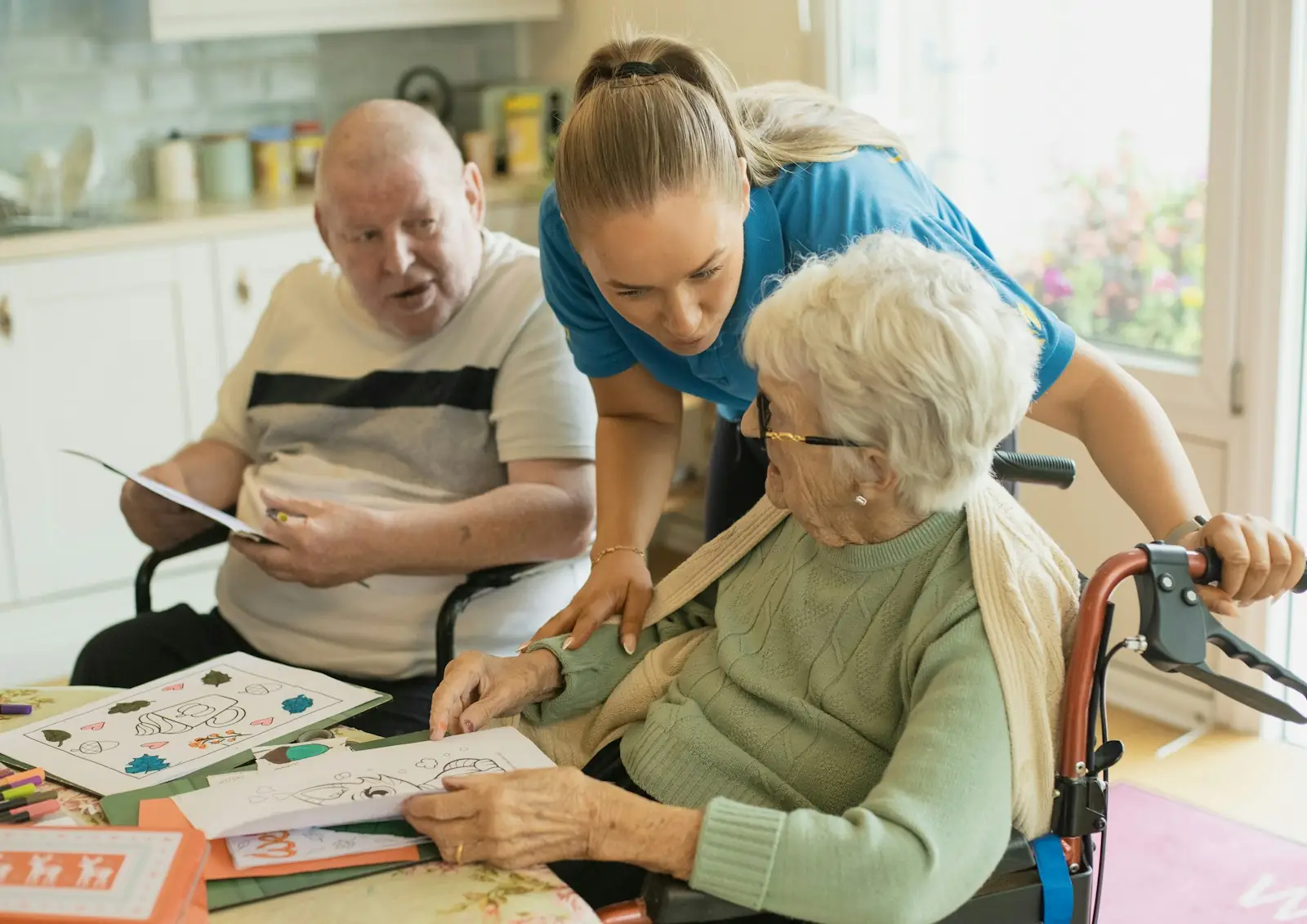 Consistent assignmentConsistent assignment means the same CNAs and nurses care for the same residents on most shifts.
 Staff stabilityStaff stability is how well a nursing home keeps its caregivers, measured by turnover and retention rates.
 Avoidable hospitalizationsMany nursing home residents sent to the hospital could have been treated safely where they live if changes in…
 Infection preventionNursing homes must run an infection control program led by a trained infection preventionist, with antibiotic…
 Pain managementGood nursing home pain management means asking every resident about pain, observing those who cannot say…
 Pressure injuriesMost nursing home pressure injuries are preventable with daily skin checks, repositioning, support surfaces…
 MobilityNursing homes protect mobility by getting residents up, walking and doing as much for themselves as they…
- Falls preventionNursing homes prevent falls best by finding and fixing each resident's specific causes: medications…
 Physical restraintsFederal law gives nursing home residents the right to be free from physical restraints used for discipline or…
 Advance care planningAdvance care planning in a nursing home means recording a resident's goals, naming a health care proxy and…
 QAPIQAPI is the data-driven quality program every certified nursing home must run under 42 CFR 483.75.
 Medication managementSafe nursing home medication management means every drug has a clear reason, gets a monthly pharmacist…
Frequently asked questions
What is quality improvement in a nursing home?
It is the continuous process of measuring how well a nursing home cares for residents, finding the causes of gaps, testing changes and keeping what works. Federal rules require every certified nursing home to run a Quality Assurance and Performance Improvement (QAPI) program with a committee, data monitoring and performance improvement projects focused on high-risk and problem-prone areas.
What are the five elements of QAPI?
CMS describes five elements: design and scope; governance and leadership; feedback, data systems and monitoring; performance improvement projects; and systematic analysis and systemic action. Together they ask a facility to cover all services, hold leaders accountable, use data, run structured projects and fix systems rather than blame individuals.
What are the main quality indicators for nursing homes?
Common indicators include staff turnover and staffing hours, health inspection deficiencies, hospital and emergency visits, infections such as UTIs, pressure ulcers, falls with major injury, antipsychotic use, and changes in mobility and daily function. Care Compare publishes many of these for every certified nursing home and combines them into star ratings.
How can I tell if a nursing home is improving?
Compare its Care Compare data over time, read the latest inspection reports and plans of correction, and ask the administrator what improvement projects are under way and what the data show. Homes committed to quality can usually name their goals, show trend charts and explain what they changed.
What was the National Nursing Home Quality Improvement Campaign?
It was the name CMS gave the former Advancing Excellence in America's Nursing Homes campaign after the Advancing Excellence in Long-Term Care Collaborative transferred operation to CMS in August 2016. It offered free goal-based tracking tools to nursing homes. This site is an independent resource and is not that campaign.
What is a PDSA cycle in long-term care?
Plan-Do-Study-Act is a rapid testing method. A team plans a small change and predicts the result, tries it on a small scale, studies the data against the prediction, then acts by adopting, adapting or abandoning the change. Nursing homes use it inside QAPI performance improvement projects.
Get help choosing care or coverage
Talk with a licensed agent about Medicare, Medigap, Medicare Advantage and ways to pay for a nursing home stay. Or call 1-800-MEDIGAP (1-800-633-4427).
Sources
- CMS: QAPI description and background
- eCFR: 42 CFR 483.75 Quality assurance and performance improvement
- CMS: Five-Star Quality Rating System Technical Users’ Guide (September 2026)
- Medicare.gov: Care Compare
- Institute for Healthcare Improvement: PDSA worksheet
- Center for Medicare Advocacy: Advancing Excellence program ends after a decade (2016)
Medical disclaimer. This page is general education, not medical, legal or financial advice, and it does not replace the judgment of a qualified clinician who knows the resident. Do not start, stop or change any medication without talking to the prescriber. In an emergency, call 911.
Independent resource. NHQualityCampaign.org is an independent educational resource. It is not affiliated with, endorsed by or operated by the Centers for Medicare & Medicaid Services (CMS), the U.S. Department of Health and Human Services (HHS), any government agency, or the original Advancing Excellence in America’s Nursing Homes campaign or its sponsors. Historical campaign information is summarized with attribution for educational purposes.
Related reading
- Advancing Excellence historyAdvancing Excellence in America's Nursing Homes was a voluntary national quality campaign that ran from…
- QAPIQAPI is the data-driven quality program every certified nursing home must run under 42 CFR 483.75.
- Quality MeasuresNursing home quality measures are standard rates, built from MDS assessments and Medicare claims, that track…
- Family guideGood nursing home care starts with comparing homes on Care Compare, visiting in person, joining care…
- Person-centered carePerson-centered care means a resident's own preferences and goals shape daily routines, meals, activities and…
- Consistent assignmentConsistent assignment means the same CNAs and nurses care for the same residents on most shifts.