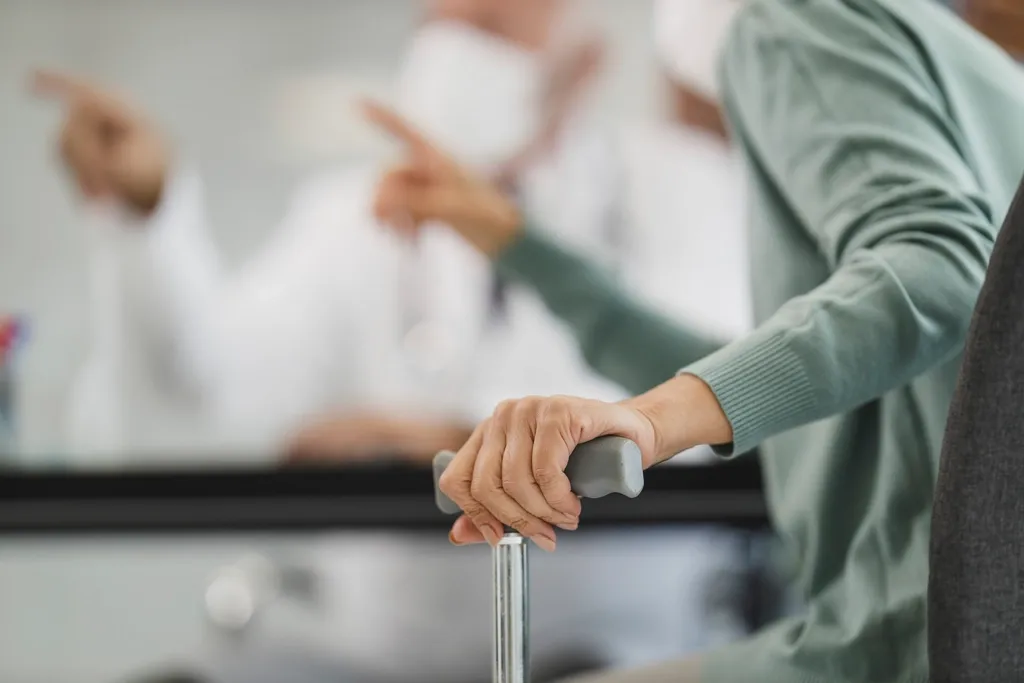
Why does mobility decline in nursing homes?
Residents arrive with illness, frailty or a recent hospital stay, and many have lost strength already. Decline then accelerates when days are spent in bed or a wheelchair, when staff push a resident in a chair because it is faster than walking beside them, or when fear of falling keeps everyone cautious. Muscles weaken quickly with inactivity, and each lost ability makes the next one harder to keep.
Mobility matters beyond walking. Moving shifts pressure off the skin, supports bowel and bladder function, improves sleep and mood, and keeps residents able to take part in the life of the home. Mobility was one of the goals of the original Advancing Excellence campaign (see its history), and it remains central to person-centered care.
How does CMS measure mobility and function?
| Measure | Population | How it works |
|---|---|---|
| Percent of Residents Whose Ability to Walk Independently Worsened | Long stay | Uses MDS Section GG item GG0170I (walk 10 feet). Counts residents whose score declined by at least one point from a prior assessment. Replaced the Section G "ability to move independently" measure when Section GG took over in October 2023. |
| Percent of Residents Whose Need for Help with Activities of Daily Living Has Increased | Long stay | Tracks increased dependence in late-loss ADLs such as bed mobility, transfers, eating and toileting. |
| Discharge Function Score | Short stay (Medicare Part A) | Compares observed functional ability at discharge with an expected score based on resident characteristics. |
Because the walking measure uses only the walk-10-feet item, residents who move mainly by wheelchair are largely outside it. That is one reason facilities should track their own data on transfers, wheelchair mobility and participation in walking programs. Learn more in long-stay measures and the MDS 3.0 explainer.
What federal rules apply?
- F676: a resident's abilities in activities of daily living must not diminish unless the decline is unavoidable because of their clinical condition.
- F677: residents who cannot carry out ADLs must receive the help they need with grooming, hygiene, nutrition and mobility.
- F688: residents must receive treatment and services to increase or prevent avoidable decrease in range of motion and mobility.
What is restorative nursing?
Restorative nursing is nursing-led care that helps residents keep or regain function after formal therapy ends, or alongside it. Trained nursing assistants carry out programs such as passive or active range of motion, splint or brace care, bed mobility, transfer practice, walking, dressing, eating and communication training. MDS item O0500 records the number of days in the past seven on which each program was provided for at least 15 minutes a day.
- 1Identify candidatesScreen residents at admission, at therapy discharge and after any decline. Ask therapy which gains need maintaining.
- 2Write specific goalsFor example, "walk to the dining room with a rolling walker and standby assistance for lunch daily," not "improve mobility."
- 3Train and assign staffUse dedicated restorative aides where possible, with consistent assignment so the same people know each resident.
- 4Document and reviewRecord minutes, assistance level and distance. Review progress monthly and adjust.
- 5Report results to QAPITrack decline rates by unit and shift, and bring trends to the QAPI committee.
How do walking programs work?
The simplest programs build walking into existing routines: walking to meals, to the bathroom and to activities rather than being wheeled. Others add scheduled walks with a goal distance, group exercise, chair-based strength and balance work, or sit-to-stand practice several times a day. Even small gains in standing and transferring can preserve independence in toileting, which matters greatly to residents.
What can families ask about mobility?
- Is my relative on a restorative nursing or walking program, and what is the goal?
- How far do they walk each day, and with what help or device?
- What happened after therapy ended, and who is maintaining the gains?
- Are they wheeled to meals when they could walk with help?
- Bring these questions to the care plan meeting and add them to your tour questions when choosing a home.
Related topics: pressure injuries, consistent assignment, and the quality improvement hub.
Frequently asked questions
What is restorative nursing in a nursing home?
Restorative nursing is nursing-led care that helps residents keep or regain abilities such as walking, transferring, dressing and eating. Trained nursing assistants carry out specific programs, often after physical or occupational therapy ends, to maintain the gains. Programs are recorded on the MDS when provided for at least 15 minutes a day and should have measurable goals reviewed regularly.
Why do residents lose the ability to walk in nursing homes?
Common causes include illness, hospital stays, pain, medications that cause dizziness, and long periods in bed or a wheelchair. Decline also accelerates when staff do tasks for residents because it is quicker, or when fear of falls keeps residents seated. Daily walking, restorative programs and pain control help prevent avoidable loss.
How does Care Compare measure mobility?
For long-stay residents, Care Compare reports the percentage whose ability to walk independently worsened, based on the MDS walk-10-feet item, and the percentage whose need for help with daily activities increased. For short-stay residents, it reports a Discharge Function Score comparing actual function at discharge with what would be expected.
Can a resident in a wheelchair still benefit from mobility programs?
Yes. Programs can target transfers, standing practice, wheelchair self-propulsion, bed mobility, range of motion and upper-body strength. Keeping the ability to stand and pivot can preserve independence in toileting and reduce the need for mechanical lifts. Ask the care team what goals fit your relative's condition.
What is F688?
F688 is the federal survey tag requiring nursing homes to provide treatment and services that increase range of motion or prevent an avoidable decrease in range of motion and mobility. Surveyors look at whether residents with limitations receive appropriate exercises, devices and restorative care, and whether any decline was clinically unavoidable.
Get help choosing care or coverage
Talk with a licensed agent about Medicare, Medigap, Medicare Advantage and ways to pay for a nursing home stay. Or call 1-800-MEDIGAP (1-800-633-4427).
Sources
Independent resource. NHQualityCampaign.org is an independent educational resource. It is not affiliated with, endorsed by or operated by the Centers for Medicare & Medicaid Services (CMS), the U.S. Department of Health and Human Services (HHS), any government agency, or the original Advancing Excellence in America’s Nursing Homes campaign or its sponsors. Historical campaign information is summarized with attribution for educational purposes.
Related reading
 Falls preventionNursing homes prevent falls best by finding and fixing each resident's specific causes: medications…
 Pressure injuriesMost nursing home pressure injuries are preventable with daily skin checks, repositioning, support surfaces…
 Physical restraintsFederal law gives nursing home residents the right to be free from physical restraints used for discipline or…
 Long-Stay MeasuresNine long-stay quality measures feed the CMS Five-Star QM rating: seven from the MDS and two from Medicare…
- Quality ImprovementNursing home quality improvement is the ongoing, data-driven work of making resident care safer and daily…
 Person-centered carePerson-centered care means a resident's own preferences and goals shape daily routines, meals, activities and…