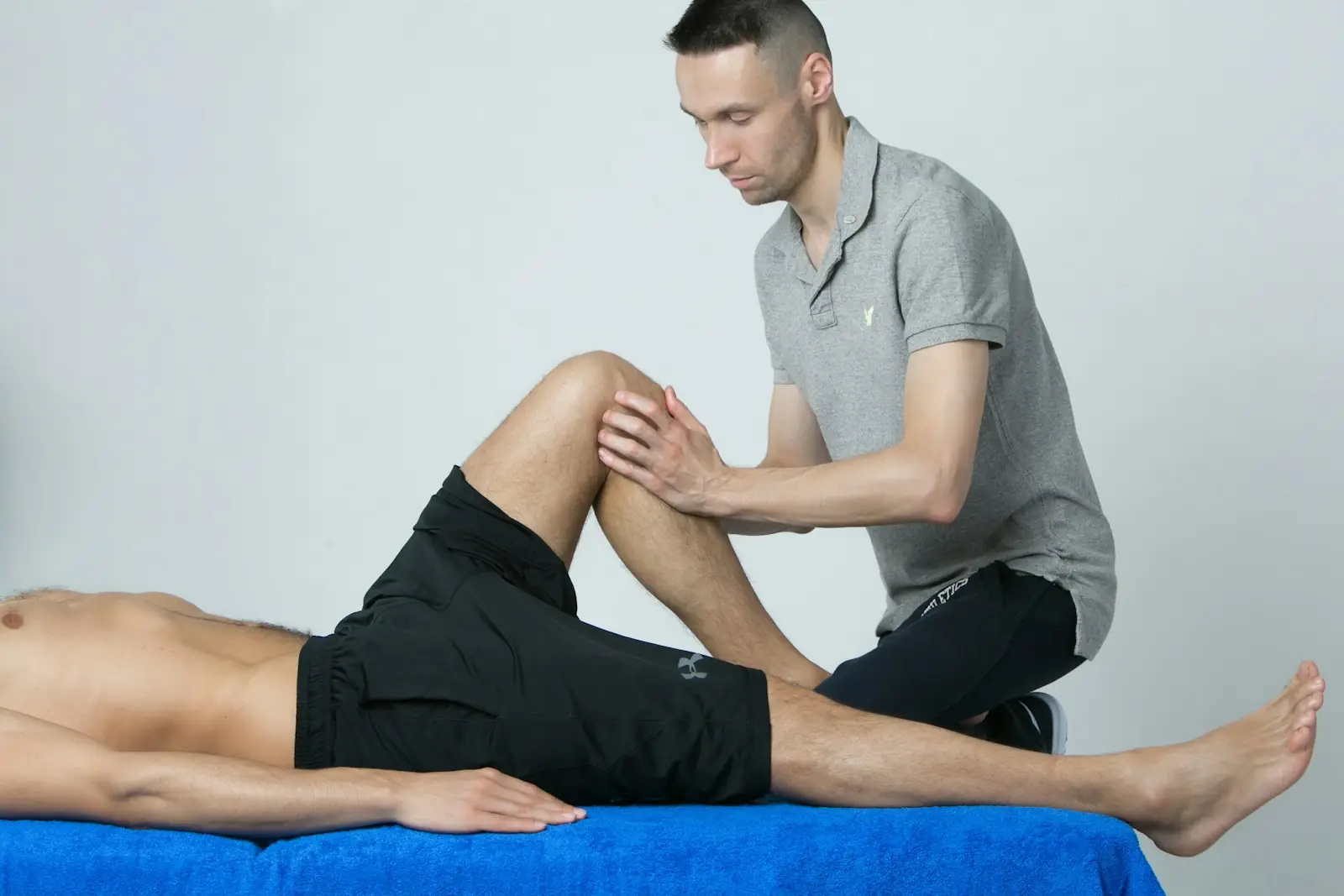
What does a physical therapist do for older adults?
A physical therapist (PT) evaluates how a person moves and builds a plan to restore safe, independent mobility. After an evaluation that usually includes strength, range of motion, balance, gait, endurance and pain, the PT sets goals tied to daily life: getting out of bed, walking to the bathroom, climbing the stairs at home, getting in and out of a car. Physical therapist assistants (PTAs) may deliver part of the treatment under the PT's plan.
- Strength and endurance: progressive exercise, often with bands or light weights.
- Balance and fall prevention: standing balance, stepping and reaction training; checking footwear and walking aids (see falls prevention).
- Gait training: walking with the right device, such as a cane, walker or wheelchair, and safe stair practice.
- Transfers and bed mobility: sit to stand, bed to chair, toilet and car transfers.
- Pain and joint care: exercise, manual techniques and education after joint replacement or fracture.
- Wound and edema care in some settings, and training caregivers to help safely.
Where can older adults get physical therapy?
| Setting | Typical use | Medicare coverage |
|---|---|---|
| Hospital | Early mobility after surgery or illness | Part A (inpatient) |
| Inpatient rehab facility | Intensive rehab with other therapies, about 3 hours a day | Part A |
| Skilled nursing facility | Daily rehab after a hospital stay | Part A after a 3-day inpatient stay; Part B for long-stay residents |
| Home health | Homebound patients | Part A or B, $0 for covered visits |
| Outpatient clinic or office | Ongoing therapy after discharge, or for a new problem | Part B, 20% after the deductible |
Nursing home residents who are not on a Medicare-covered stay can still receive PT under Part B when there is a skilled need, for example after a fall or a decline in walking. Families can ask for a therapy screen at any time.
Does Medicare cover physical therapy?
Yes, when it is medically necessary. Part B covers outpatient physical therapy at 20% of the Medicare-approved amount after the $283 annual deductible in 2026. A physician or other qualified practitioner must certify the therapist's plan of care. Coverage under Parts A and B for facility and home health therapy is described on our Medicare coverage for rehab page.
Is there a limit on Medicare physical therapy?
No hard limit. The Bipartisan Budget Act of 2018 repealed the old annual therapy caps. Instead there is a KX modifier threshold: in 2026, once Medicare-allowed charges for physical and speech-language therapy combined reach $2,480 in the year, the therapist must add the KX modifier to confirm the care remains medically necessary and documented. Occupational therapy has its own separate $2,480 threshold. Claims above $3,000 may be selected for targeted medical review.
Does Medicare pay for therapy to maintain function?
Yes. Under the 2013 Jimmo v. Sebelius settlement, Medicare coverage of skilled therapy does not depend on the potential to improve. Skilled therapy needed to maintain function or prevent or slow decline is covered when the skills of a therapist are required, for example to design or safely carry out a maintenance program for someone with Parkinson's disease or multiple sclerosis.
How do you get the most out of physical therapy?
- Bring a list of goals that matter to the person, such as "walk to the mailbox" or "get into the shower safely."
- Wear supportive shoes and comfortable clothing; bring glasses, hearing aids and the walking aid you use.
- Ask for the home exercise program in writing or on video, and do it between sessions.
- Report dizziness, chest pain, new shortness of breath or increased pain right away.
- Ask about fall risk at home and whether an occupational therapist should review home safety (see occupational therapy).
For professionals: PT in post-acute and long-term care
- Use standardized tests (for example gait speed, Timed Up and Go, Berg Balance Scale, 30-second chair stand) at admission and discharge so progress is measurable and aligned with Section GG of the MDS.
- Document skilled need for maintenance programs clearly; Jimmo coverage turns on the need for a therapist's skills, not on improvement.
- Build restorative nursing programs for residents who finish skilled therapy, and link them to mobility goals in QAPI.
- Review every fall with injury with nursing and the physician; feed findings back into the care plan (F689 accidents).
- Keep therapy policies, competency checklists and caregiver training materials versioned and easy to find; free tools such as this policy and SOP builder for providers can help small therapy departments stay organized.
Frequently asked questions
How many physical therapy visits does Medicare allow per year?
There is no set number of visits. Medicare covers outpatient physical therapy as long as it is medically necessary and documented. In 2026, after $2,480 in combined PT and speech therapy charges, your therapist adds the KX modifier to confirm medical necessity; claims above $3,000 may be reviewed.
Do I need a doctor's referral for physical therapy under Medicare?
Many states let you see a physical therapist directly for an evaluation, but Medicare requires a physician or other qualified practitioner to certify the therapist's plan of care for Medicare to pay. In practice, ask your doctor to sign the plan or write a referral to avoid billing problems.
What does physical therapy cost with Medicare?
For outpatient therapy you pay 20% of the Medicare-approved amount after the Part B deductible ($283 in 2026). Therapy during a covered inpatient rehab, skilled nursing or home health stay is part of that benefit. Medigap or other supplemental coverage can pay some or all of the 20%.
Can physical therapy help prevent falls in older adults?
Yes. Exercise programs that challenge balance and build strength reduce falls in older adults. A physical therapist can identify specific risks, such as weak hip muscles, slow reaction time or an unsafe walking aid, and tailor a program. Pair it with medication review, vision checks and home safety changes.
Can you get physical therapy at home with Medicare?
Yes. If you are homebound and need skilled therapy, a Medicare-certified home health agency can provide physical therapy at home at no cost for covered visits. If you are not homebound, some outpatient therapists make house calls billed under Part B, with the usual 20% coinsurance.
Get help finding rehab after a hospital stay
Talk with a licensed agent about Medicare coverage for inpatient rehab and skilled nursing. Or call 1-800-MEDIGAP (1-800-633-4427).
Sources
Medical disclaimer. This page is general education, not medical, legal or financial advice, and it does not replace the judgment of a qualified clinician who knows the resident. Do not start, stop or change any medication without talking to the prescriber. In an emergency, call 911.
Medicare disclaimer. We do not offer every plan available in your area. Any information we provide is limited to those plans we do offer in your area. Please contact Medicare.gov or 1-800-MEDICARE (TTY 1-877-486-2048), 24 hours a day, 7 days a week, to get information on all of your options.
NHQualityCampaign.org is not connected with or endorsed by the U.S. government or the federal Medicare program. Calls to 1-800-MEDIGAP (1-800-633-4427) are answered by licensed insurance agents, not by Medicare or CMS.
Independent resource. NHQualityCampaign.org is an independent educational resource. It is not affiliated with, endorsed by or operated by the Centers for Medicare & Medicaid Services (CMS), the U.S. Department of Health and Human Services (HHS), any government agency, or the original Advancing Excellence in America’s Nursing Homes campaign or its sponsors. Historical campaign information is summarized with attribution for educational purposes.
Related reading
 RehabilitationRehab after an illness, injury or surgery can happen in an inpatient rehab facility, a nursing home, at home…
 Occupational therapyOccupational therapy helps older adults get back to everyday tasks such as dressing, bathing, toileting…
 Home health and outpatient rehabAfter discharge, therapy can continue at home through Medicare home health if you are homebound, or at an…
 MobilityNursing homes protect mobility by getting residents up, walking and doing as much for themselves as they…
 Falls preventionNursing homes prevent falls best by finding and fixing each resident's specific causes: medications…
- Inpatient rehab facilitiesAn inpatient rehabilitation facility (IRF) is a rehab hospital or unit giving intensive therapy, generally 3…