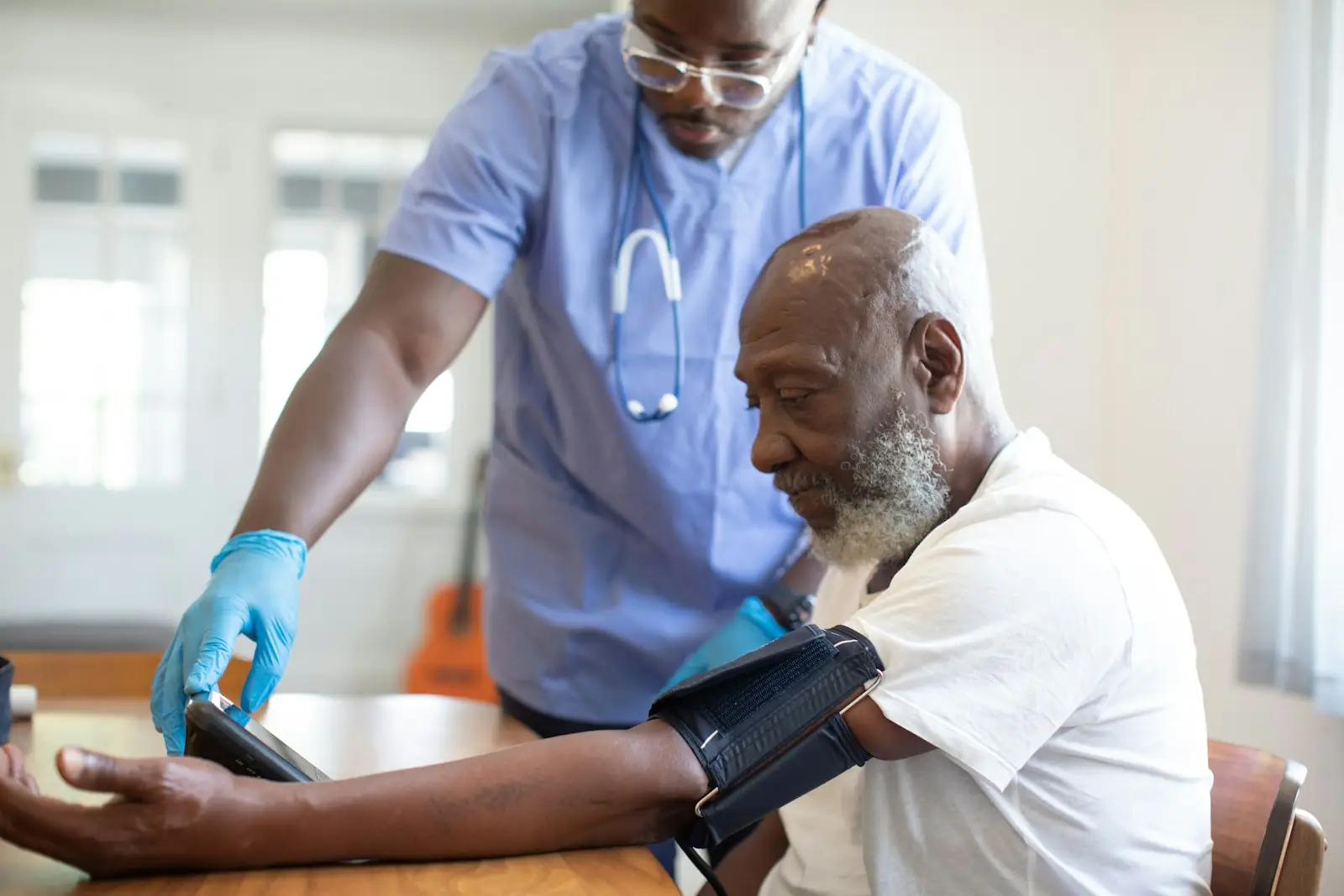
What is cardiac rehab?
Cardiac rehabilitation is an outpatient program, usually based at a hospital or clinic, that helps people recover from a heart event and lower the chance of another one. A team of nurses, exercise physiologists, dietitians and physicians supervises exercise with heart monitoring, teaches about medications, diet, blood pressure, cholesterol and smoking, and screens for depression and stress. The program is tailored to each person's heart condition and fitness level.
What are the phases of cardiac rehab?
| Phase | Where | What happens |
|---|---|---|
| Phase 1 (inpatient) | Hospital, during the stay for the heart event | Early walking, education about the condition and medicines, referral to outpatient rehab |
| Phase 2 (outpatient, supervised) | Hospital outpatient department or physician-directed clinic | Monitored exercise sessions, typically 2 to 3 times a week for about 12 weeks, plus education and counseling. This is the phase Medicare's session limits apply to. |
| Phase 3 (maintenance) | Community gym, home or a maintenance program | Continuing the exercise and lifestyle habits independently; usually not covered by Medicare |
"Phases" are a common way programs describe the process; Medicare itself just refers to cardiac rehab (CR) and intensive cardiac rehab (ICR).
Who qualifies for cardiac rehab under Medicare?
Medicare Part B covers cardiac rehab if you have had at least one of the following and your doctor refers you:
- A heart attack in the last 12 months.
- Coronary artery bypass surgery.
- Current stable angina (chest pain).
- Heart valve repair or replacement.
- Coronary angioplasty or coronary stenting.
- A heart or heart-lung transplant.
- Stable chronic heart failure: left ventricular ejection fraction of 35% or less, NYHA class II to IV symptoms, and at least 6 weeks of optimal heart failure therapy.
How many cardiac rehab sessions does Medicare cover?
| Program | Sessions per day | Total sessions | Time frame |
|---|---|---|---|
| Cardiac rehab (CR) | Up to 2 one-hour sessions | Up to 36 | Up to 36 weeks; 36 additional sessions possible with Medicare contractor approval |
| Intensive cardiac rehab (ICR) | Up to 6 one-hour sessions | Up to 72 | Within 18 weeks |
Intensive cardiac rehab programs, such as those built around lifestyle change programs approved by CMS, use a more intensive schedule with a stronger emphasis on diet and stress management. They are available in fewer places.
How much does cardiac rehab cost with Medicare?
After the Part B deductible ($283 in 2026), you pay 20% of the Medicare-approved amount. In a hospital outpatient setting you also pay the hospital a copayment for each session. Over 36 sessions those costs add up, so check whether a Medigap plan or other supplemental coverage pays the coinsurance. Medicare Advantage plans must cover cardiac rehab but set their own copays and may require a network program. See Medicare coverage for rehab and does Medicare cover cardiac rehab?
Why is cardiac rehab underused?
In a study of Medicare fee-for-service beneficiaries who became eligible in 2016, only 24.4% attended at least one session, and of those, only 26.9% completed the program. Participation was lower among women (18.9%) than men (28.6%) and among Hispanic and Black beneficiaries. Common barriers are not being referred, travel distance, cost-sharing and session times that clash with work or caregiving.
What about pulmonary rehab?
Pulmonary rehab is the lung equivalent: supervised exercise, breathing techniques and education. Medicare Part B covers it for moderate to very severe COPD and for confirmed or suspected COVID-19 with persistent symptoms, including respiratory dysfunction, lasting at least 4 weeks. Sessions are limited to 2 one-hour sessions a day, up to 36 sessions (with up to 36 more if the Medicare contractor approves). Cost sharing is the same as cardiac rehab.
Cardiac rehab for nursing home residents and frail older adults
Some people are too weak after heart surgery or a heart failure admission to go straight home or attend outpatient rehab. They may start in an IRF or a skilled nursing facility, then begin outpatient cardiac rehab once they can travel. Ask the discharge team to plan that hand-off so the referral is not lost. Physical therapy to rebuild strength (see physical therapy) can bridge the gap.
Frequently asked questions
How many cardiac rehab sessions does Medicare cover?
Medicare covers up to 36 one-hour sessions of regular cardiac rehab, at most 2 a day, over up to 36 weeks; your Medicare contractor can approve 36 more. Intensive cardiac rehab is covered for up to 72 sessions, up to 6 a day, within 18 weeks.
Is cardiac rehab worth it?
Cardiac rehab is recommended by major heart societies for eligible patients because it improves fitness, helps control risk factors and is associated with fewer deaths and hospital readmissions. The benefit depends on attending; even partial participation helps, so ask about scheduling that fits your life.
How long does cardiac rehab last?
Most programs run about 12 weeks with 2 to 3 sessions a week, often around 36 sessions in total. Medicare allows those sessions to be spread over up to 36 weeks. Intensive programs use up to 72 sessions within 18 weeks. After that, people continue exercising on their own or in a maintenance program.
Does Medicare cover cardiac rehab for heart failure?
Yes, for stable chronic heart failure with a left ventricular ejection fraction of 35% or less and NYHA class II to IV symptoms, after at least 6 weeks of optimal heart failure therapy. Ask your cardiologist whether you meet those criteria and for a referral.
What is the difference between cardiac rehab and intensive cardiac rehab?
Both are Medicare Part B benefits for the same heart conditions. Regular cardiac rehab covers up to 36 sessions at up to 2 a day. Intensive cardiac rehab, offered only by CMS-approved programs, covers up to 72 sessions at up to 6 a day within 18 weeks, with heavier emphasis on lifestyle change.
What does cardiac rehab cost with Medicare?
You pay 20% of the Medicare-approved amount after the Part B deductible ($283 in 2026). In a hospital outpatient program you also pay a hospital copayment per session. Medigap or other supplemental coverage may pay some or all of these costs.
Get help finding rehab after a hospital stay
Talk with a licensed agent about Medicare coverage for inpatient rehab and skilled nursing. Or call 1-800-MEDIGAP (1-800-633-4427).
Sources
- Medicare.gov: Cardiac rehabilitation programs
- 42 CFR 410.49: Cardiac rehab and intensive cardiac rehab (Cornell LII)
- Medicare.gov: Pulmonary rehabilitation
- 42 CFR 410.47: Pulmonary rehabilitation (Cornell LII)
- Ritchey MD et al. Tracking cardiac rehabilitation participation and completion among Medicare beneficiaries. Circ Cardiovasc Qual Outcomes, 2020
- Million Hearts: Cardiac rehabilitation is underused
Medical disclaimer. This page is general education, not medical, legal or financial advice, and it does not replace the judgment of a qualified clinician who knows the resident. Do not start, stop or change any medication without talking to the prescriber. In an emergency, call 911.
Medicare disclaimer. We do not offer every plan available in your area. Any information we provide is limited to those plans we do offer in your area. Please contact Medicare.gov or 1-800-MEDICARE (TTY 1-877-486-2048), 24 hours a day, 7 days a week, to get information on all of your options.
NHQualityCampaign.org is not connected with or endorsed by the U.S. government or the federal Medicare program. Calls to 1-800-MEDIGAP (1-800-633-4427) are answered by licensed insurance agents, not by Medicare or CMS.
Independent resource. NHQualityCampaign.org is an independent educational resource. It is not affiliated with, endorsed by or operated by the Centers for Medicare & Medicaid Services (CMS), the U.S. Department of Health and Human Services (HHS), any government agency, or the original Advancing Excellence in America’s Nursing Homes campaign or its sponsors. Historical campaign information is summarized with attribution for educational purposes.
Related reading
 RehabilitationRehab after an illness, injury or surgery can happen in an inpatient rehab facility, a nursing home, at home…
 Medicare coverage for rehabMedicare covers medically necessary rehab in every setting, but the rules and costs differ for each.
 Physical therapyPhysical therapy helps older adults rebuild strength, balance and walking after illness, injury or surgery…
 Home health and outpatient rehabAfter discharge, therapy can continue at home through Medicare home health if you are homebound, or at an…
 Medicare Supplement plansMedicare Supplement (Medigap) plans are private policies that pay some or all of Original Medicare's…
 Inpatient rehab facilitiesAn inpatient rehabilitation facility (IRF) is a rehab hospital or unit giving intensive therapy, generally 3…